Batu Caves – Complete Visitor Guide

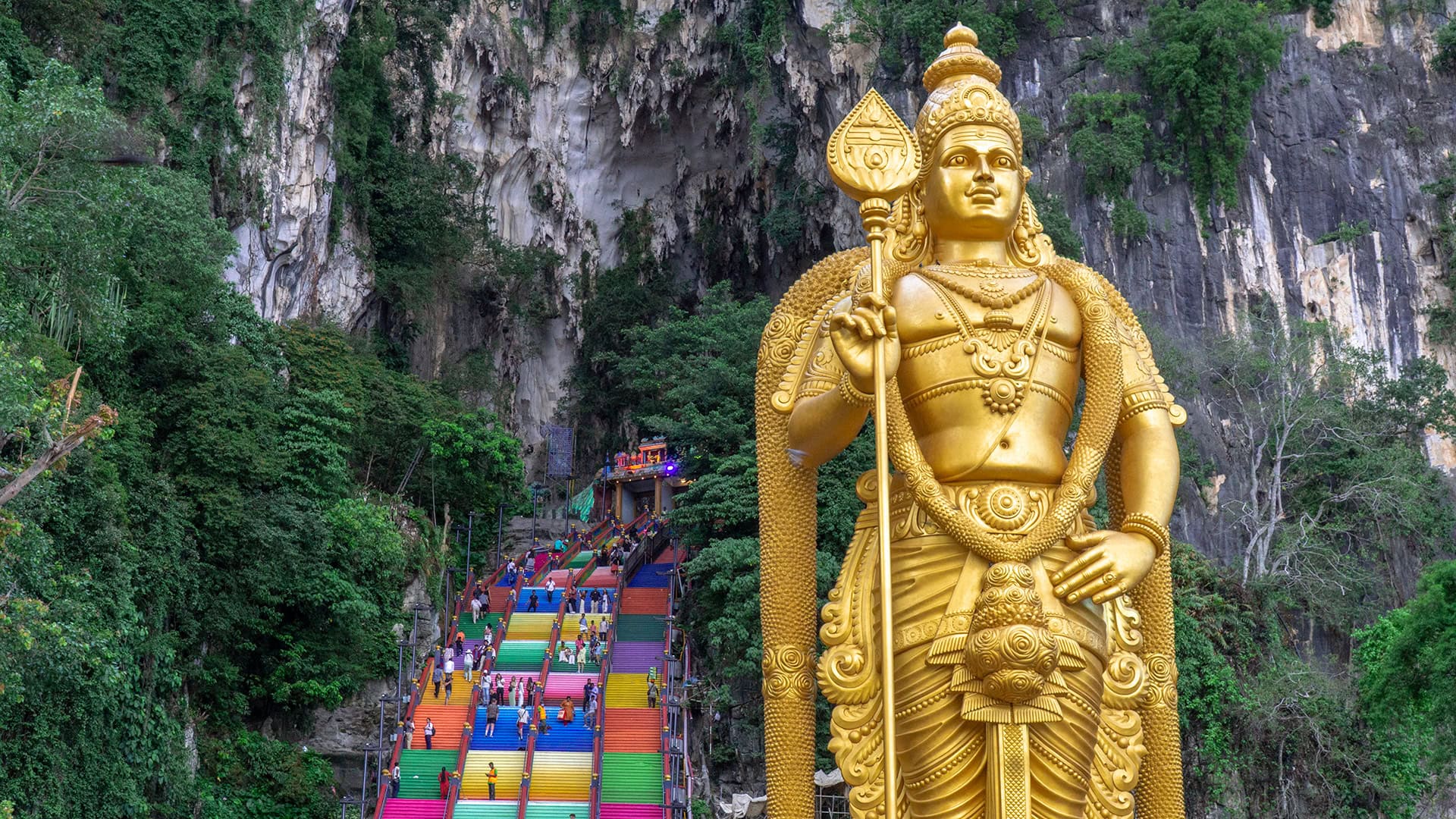
Batu Caves is a limestone hill Hindu temple complex in Gombak, Selangor, 13 km north of central Kuala Lumpur. It is best known for the 42.7-metre golden statue of Lord Murugan and the 272-step rainbow-coloured staircase leading to the Temple Cave inside a limestone hill estimated to be over 400 million years old.
A visit typically takes 1–2 hours, making it easy to include in a half-day itinerary from Kuala Lumpur. The Temple Cave is free to enter — no ticket required.
Batu Caves is approximately 30 minutes from central Kuala Lumpur by car, taxi, e-hailing, or train. Independent visitors can take the KTM Komuter from KL Sentral directly to Batu Caves station. Travellers who prefer a guided experience can combine Batu Caves with Kuala Lumpur city highlights in one private half-day tour with hotel pickup.
| Location | Gombak, Selangor — 13 km north of central Kuala Lumpur |
| Travel time from KL | Approximately 30 minutes by car, taxi, e-hailing, or train |
| Entrance fee | Temple Cave — Free · Ramayana Cave — RM15 · Cave Villa — RM10 |
| Opening hours | Temple complex: 5:30 AM – 9:00 PM · Staircase access: 6:00 AM – 8:30 PM |
| Steps to Temple Cave | 272 steps |
| Murugan statue height | 42.7 metres |
| Recommended visit | 1–2 hours |
| Private tour | Book a private Batu Caves city tour → |
Batu Caves is a limestone hill temple complex located in Gombak, Selangor, about 13 kilometres north of central Kuala Lumpur. The site is famous for the towering 42.7-metre statue of Lord Murugan, the colourful 272-step staircase leading to the Temple Cave above, and the dramatic limestone cliffs estimated to be more than 400 million years old.
For travellers staying in Kuala Lumpur, it is one of the most visited day trips from Kuala Lumpur — approximately 30 minutes from central Kuala Lumpur by car, taxi, e-hailing, or train and easy to fit into a half-day itinerary. Today, Batu Caves is widely regarded as one of the most visited attractions in Kuala Lumpur — and one of the easiest to reach from the city centre and one of the most visited destinations in Malaysia, attracting both pilgrims and international travellers throughout the year.
Although many visitors first recognise the colourful staircase and the monumental Murugan statue, Batu Caves is far more than a scenic landmark. The caves form an active Hindu temple complex dedicated to Lord Murugan, where daily prayers, offerings, and religious rituals continue to take place. During the annual Thaipusam festival, hundreds of thousands of Hindu devotees climb the staircase as part of one of the largest Murugan pilgrimages outside India.
Timing your visit well makes a real difference — early mornings are cooler, less crowded, and better for photography. See the best time to visit Batu Caves for a full breakdown by time of day and season.
This guide explains what to see at Batu Caves, how the temple complex is organised, and how to plan your visit. Each section also links to more detailed guides covering practical topics such as opening hours, dress code, transport options, and visiting tips for first-time travellers.
If you are planning a full day in the city after Batu Caves, our guide to things to do in Kuala Lumpur covers the best zones, cultural experiences, and evening activities within the city.
What Is Batu Caves?
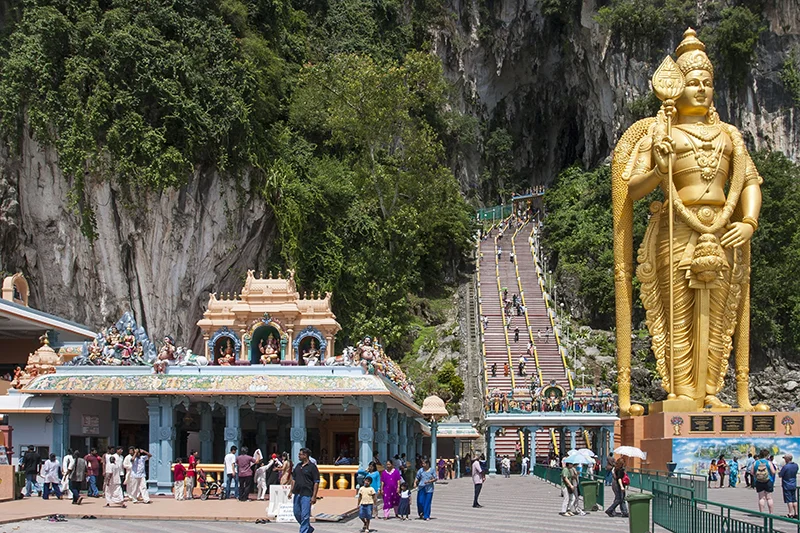
Batu Caves is one of the most important Hindu temple complexes in Southeast Asia — a series of large limestone cave chambers in Gombak, Selangor that have served as a pilgrimage site for Tamil Hindu devotees since the late 19th century. The main cave is dedicated to Lord Murugan, the Hindu god of war and victory, and remains an active place of religious worship to this day.
“Batu” means rock or stone in the Malay language. The caves take their name from the nearby Sungai Batu — the Batu River — which runs along the base of the limestone hill. The river itself is named after the dramatic limestone rocks and cave formations along its banks. “Batu Caves” translates directly as “Rock Caves” — a straightforward description of what the place is. There is no other local name for the site; it has always been known simply as Batu Caves.
The site sits just outside Kuala Lumpur’s city boundary in Selangor, but is consistently grouped with KL’s major attractions given how close it is to the city centre.
How Batu Caves Became a Temple
The limestone hill first attracted international attention in 1878, when American naturalist William Hornaday documented the caves during his exploration of the Malay Peninsula. In his book Two Years in the Jungle, he described the main cave chamber in vivid detail:
“We found ourselves in a grand cathedral. We walked along a grand gallery with clean and level floor, perpendicular walls and gothic roof like nave of a cathedral, 50 feet wide and 60 feet high. At the far end the roof rose in a great round dome 90 or 100 feet.”
That grand gallery Hornaday described later became the Temple Cave — the active place of Hindu worship it remains today. It is also why the Temple Cave is sometimes referred to as the Cathedral Cave.
Twelve years later, in 1890, Tamil Hindu leader K. Thamboosamy Pillai visited the site and noticed that the entrance to the main cave resembled the shape of the Vel — Lord Murugan’s divine spear. He consecrated the cave as a temple dedicated to Murugan, and the first idol was formally installed in 1891.
Since then, Batu Caves has been considered the most significant Lord Murugan temple in Malaysia and one of the principal Murugan pilgrimage sites outside India.
The site has continued to develop in line with Malaysia’s growth as a country. The Batu Caves staircase has a history of its own: the first steps to the Temple Cave were built in 1920 as a simple wooden structure, and by 1940 two concrete flights of stairs had been completed. In 2006, the iconic 42.7-metre golden statue of Lord Murugan was fully completed at the base of the hill — one of the most recognisable landmarks in the country today.
In 2018, the temple management carried out the last major renovation of the staircase: an additional lane was added to improve the flow of pilgrims and visitors, and the steps were painted in their now-famous rainbow colours. An escalator system is currently under construction and is expected to be operational before the 2027 Thaipusam festival, which will further improve access for all visitors.
What the Complex Contains
The Batu Caves complex today covers the base of the limestone hill and the cave chambers above it. The main Temple Cave sits at the top of the 272-step staircase and is the centre of Hindu worship at the site. At ground level, the Ramayana Cave houses life-sized statues depicting scenes from the Ramayana epic. Several smaller temples and shrines are also scattered around the base — often overlooked by visitors heading straight for the staircase.
The Dark Cave, a separate two-kilometre cave system that was previously open for guided educational tours managed by the Malaysian Nature Society, is now permanently closed to the public.
Beyond the religious structures, the limestone hill itself is a recognised biodiversity site. Researchers have documented hundreds of plant species, multiple bat colonies, and several endemic organisms found nowhere else in the world — including the trapdoor spider Liphistius batuensis, which is unique to these caves.
For travellers incorporating Batu Caves into a longer Malaysia trip, the Malaysia travel guide covers how the site fits alongside destinations such as Cameron Highlands and Taman Negara.
Key Facts
|
Details |
Information |
|---|---|
|
Location |
Gombak, Selangor (13 km north of Kuala Lumpur) |
|
Established as temple |
1891 |
|
Main deity |
Lord Murugan (Hindu god of war) |
|
Murugan statue height |
42.7 meter |
|
Steps to Temple Caves |
272 |
|
Step inside Temple Cave |
101 (leading to the inner shrine chamber) |
|
Limestone age |
Over 400 million years |
|
Entrance fee |
Free (Temple Cave), paid for Ramayana Cave and Caves Villa |
|
Daily statues |
Active Hindu temple — daily prayers and offerings throughout the year |
Quick Visiting Tips
- Visit early morning or late afternoon — Before 8:00 AM is the coolest and least crowded window, with softer light for photography. Late afternoon from 4:00 PM onwards is the second best option — temperatures drop, crowds thin out, and it fits naturally into a combined day that continues to Kuala Selangor for an evening firefly tour.
- Dress modestly – Shoulders and knees must be covered to enter temple areas.
- Bring water – The climb to the Temple Cave involves 272 steps, and there are no water fountains along the staircase.
- Watch for monkeys – Long-tailed macaques often sit along the railings and may grab food or loose items.
- Allow 1–2 hours – This is enough time to climb the staircase, explore the Temple Cave, and visit the Murugan statue area.
- Plan your timing around what comes next — Batu Caves takes 1–2 hours, which makes it easy to pair with other experiences. A morning visit combines well with a Kuala Lumpur city tour in the afternoon. A late afternoon visit pairs naturally with an evening firefly tour in Kuala Selangor — we run a combined Batu Caves and Fireflies tour that covers both in one day. For a full-day nature trip, combine with the Malaysia Elephant Sanctuary in Kuala Gandah.
What to See at Batu Caves
The Batu Caves complex is not a single attraction but a collection of landmarks, cave chambers, and temple structures spread across the base of the limestone hill and inside the Temple Cave above. The site combines striking natural geology with active Hindu worship, creating a place where religious rituals, mythology, and dramatic cave formations exist side by side.
Most visitors arrive to see the towering statue of Lord Murugan and climb the famous 272-step staircase leading to the Temple Cave. Along the way and inside the cave, travellers will also encounter shrines, statues depicting scenes from Hindu mythology, prayer rituals performed by devotees, and the rugged limestone formations that define the landscape.
Most travellers spend one to two hours exploring Batu Caves. Visitors who take time to explore the ground-level temples, Ramayana Cave, or surrounding areas may wish to allow additional time.
Iconic Landmarks at the Entrance
Lord Murugan Statue
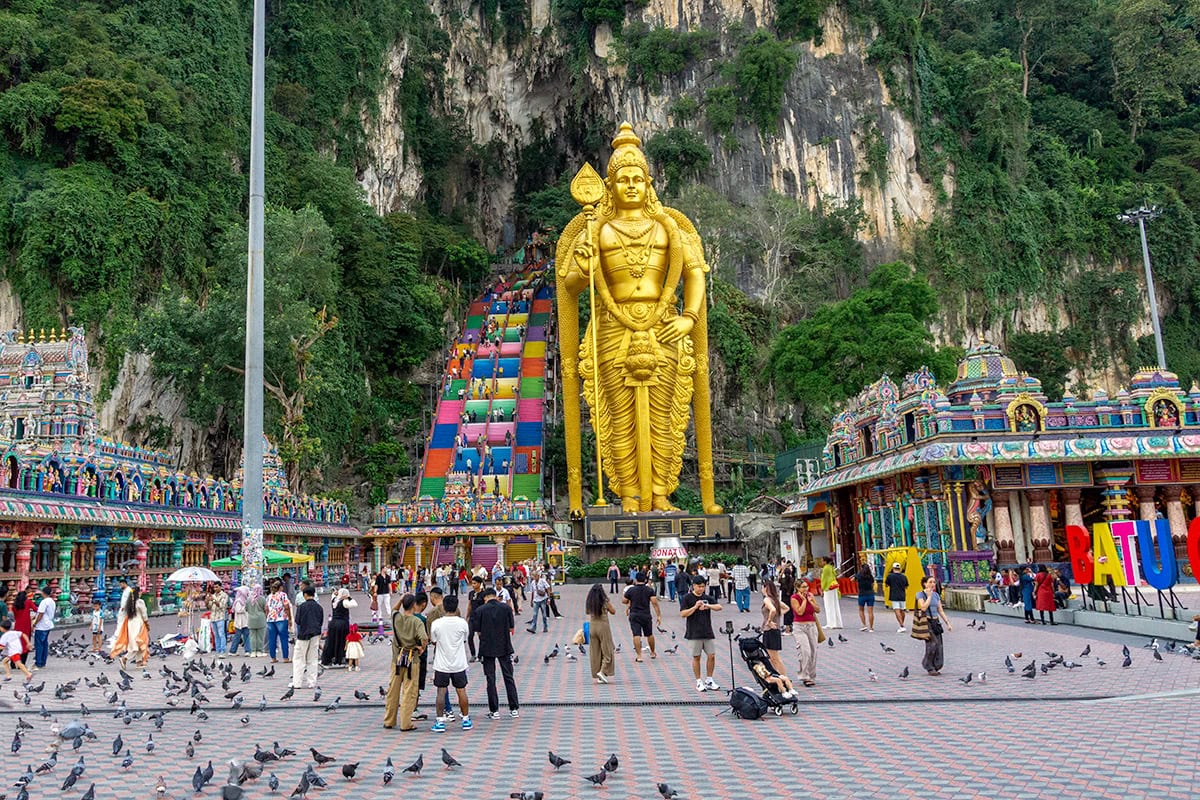
The 42.7-metre golden statue of Lord Murugan stands at the entrance to Batu Caves and is one of the most recognisable landmarks in Malaysia. The statue marks the entrance to Malaysia’s most important temple dedicated to Lord Murugan and symbolically welcomes devotees climbing the staircase to the Temple Cave above.
Constructed from reinforced concrete and coated in gold paint, the statue took approximately three years to complete. Murugan — also known as Kartikeya or Subramanya — is the Hindu god of war and victory. In the statue, he holds a Vel (divine spear), an important symbol associated with Murugan and the annual Thaipusam festival celebrated at Batu Caves.
For the statue’s full height, history, and the best angles for photos, see our complete guide to the Lord Murugan statue at Batu Caves.
Climbing the 272 Steps
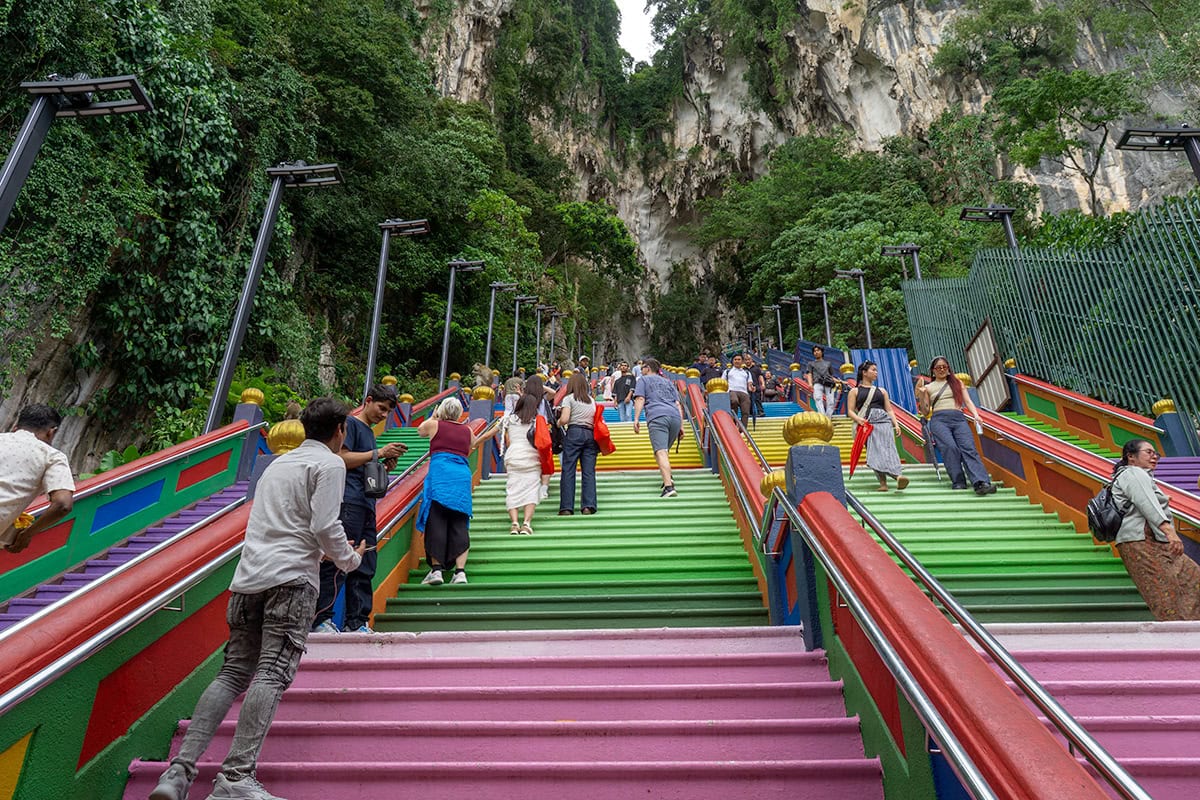
One of the most memorable parts of visiting Batu Caves is climbing the 272 colourful steps that lead from the base of the hill to the Temple Cave above. The staircase rises roughly 100 metres in elevation, and although the climb is not technically difficult, the tropical heat and humidity can make it feel more demanding than visitors expect. If you want a closer look at the history of the staircase, step layout, and what the climb is like, see our detailed guide to the Batu Caves staircase.
Most travellers complete the climb in 10–20 minutes, depending on their pace and crowd levels. The steps are wide and stable, and several small landings allow visitors to pause, rest, or take photos of the temple complex below.
After reaching the Temple Cave entrance, visitors will also find a smaller staircase of about 101 steps inside the cave, leading to the inner shrine area beneath a natural opening in the limestone ceiling.
The climb is more comfortable early in the morning or later in the afternoon, when temperatures are cooler and the staircase is less crowded. Midday climbs can feel significantly harder due to the heat and direct sunlight.
How Difficult Is the Staircase?
For most visitors with average mobility, the staircase is manageable. Families with children, older travellers, and casual tourists climb the steps every day, although the tropical climate can make the ascent more tiring than expected.
Practical tips for the climb:
- Take your time. Many visitors pause three or four times on the way up — this is normal.
- Wear shoes with grip. The steps become slippery after rain.
- Bring water. There are no water fountains on the staircase or inside the Temple Cave.
- Watch for monkeys. Long-tailed macaques sit along the railings — keep food out of sight.
Despite the effort, the climb is considered one of the highlights of the visit. As you ascend, the view gradually opens across the temple complex below while the limestone cave entrance becomes increasingly impressive.
Future Accessibility Improvements
At present, the 272-step staircase remains the only way to reach the Temple Cave.
However, temple authorities are currently constructing an escalator system to improve accessibility for visitors who may find the climb difficult. Based on the latest updates from the site, the escalator is expected to be completed by the end of 2026 and operational before the 2027 Thaipusam festival.
Until the escalator is finished, visitors who prefer not to climb can still explore several attractions at ground level, including the Murugan statue, the colourful gopuram, the Ramayana Cave, and nearby temples.
Monkeys at Batu Caves
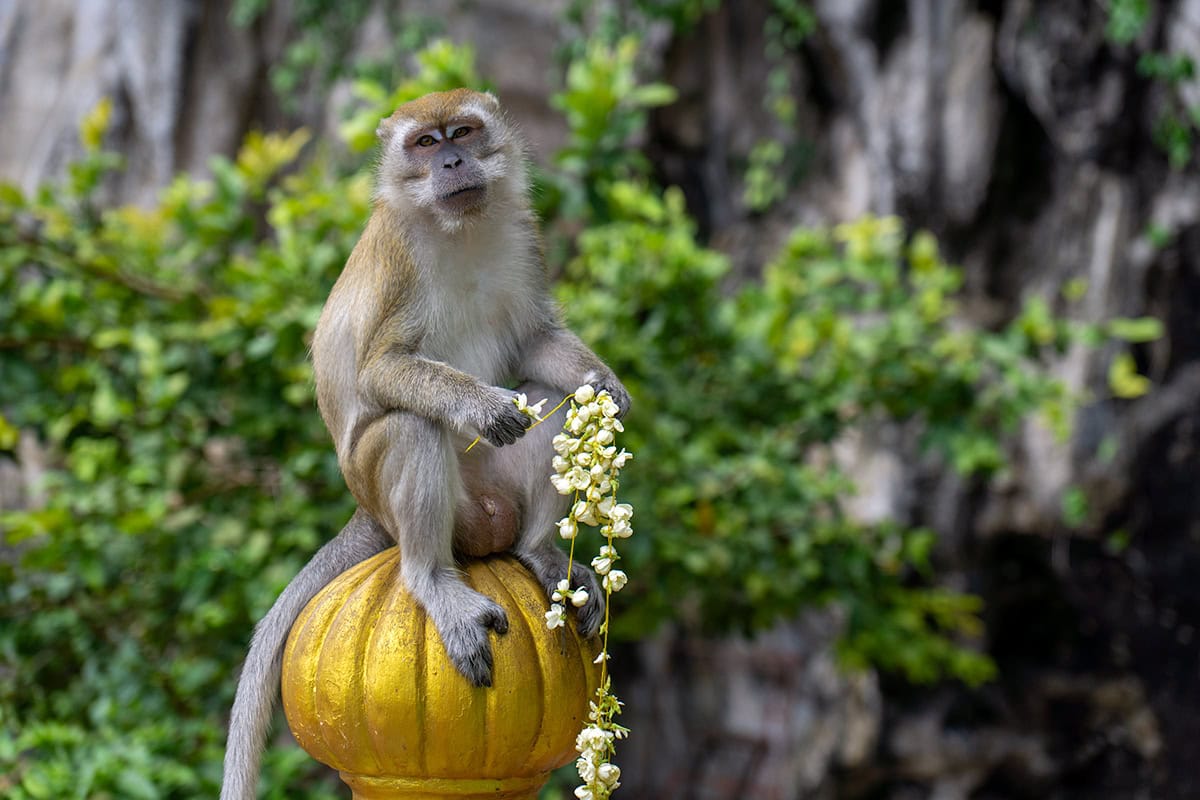
Long-tailed macaques are a common sight around Batu Caves, particularly along the staircase and near the entrance to the Temple Cave. These monkeys have lived around the limestone hill for many years and are accustomed to the constant presence of visitors.
Most of the time the monkeys sit along the railings or move between the limestone rocks searching for food. Although they may appear playful or curious, they remain wild animals and should be treated with caution.
Visitors carrying food, drinks, or plastic bags may attract their attention. It is best to keep bags closed and avoid holding snacks while climbing the staircase.
Four precautions that matter:
- Do not feed the monkeys. It encourages more aggressive behaviour from the group.
- Keep food inside bags, not in your hands.
- Hold phones and cameras securely — they will grab at reflective objects.
- Stay calm if one approaches. Do not run or make sudden movements.
Watching the monkeys move along the staircase often becomes a memorable part of the Batu Caves visit, but maintaining a respectful distance is recommended.
Inside the Temple Cave
As visitors reach the top of the staircase, the entrance to the Temple Cave becomes fully visible. The large limestone arch forms the gateway into the main chamber of Batu Caves.
Temple Cave (Main Cave)

The Temple Cave, sometimes referred to as the Cathedral Cave, is the largest and most important chamber in the Batu Caves complex. The cave extends approximately 100 metres into the limestone hill, with a ceiling rising more than 100 metres above the ground.
Natural openings in the cave roof allow daylight to enter the chamber, creating shifting lighting conditions throughout the day. Sunlight often illuminates parts of the cave floor and temple structures, highlighting the scale of the limestone formations.
Several shrines dedicated to Lord Murugan are located inside the cave, where devotees regularly perform prayers and religious offerings.
At the far end of the chamber, a smaller staircase leads to an open section of the cave where another temple stands beneath a natural opening in the limestone ceiling.
Limestone Formations and Stalactites
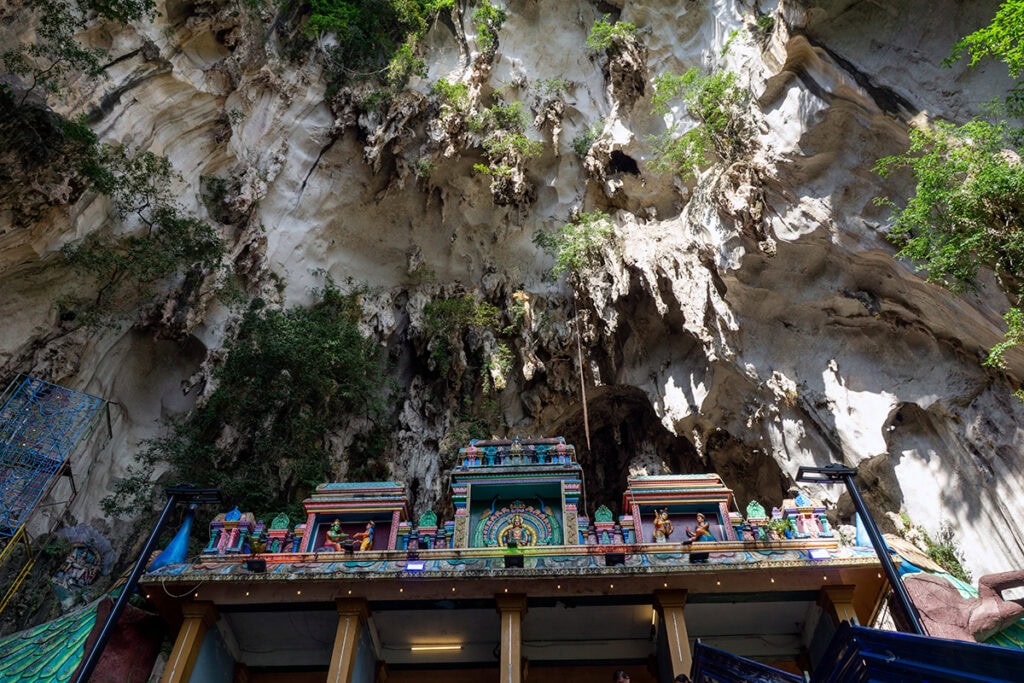
The Batu Caves limestone hill is estimated to be over 400 million years old, making it one of the oldest natural formations in the Kuala Lumpur region.
Inside the Temple Cave, visitors can observe large limestone walls and stalactites formed over thousands of years as mineral-rich water slowly dripped from the cave ceiling. These formations create the rugged textures and dramatic scale of the cave interior.
Natural openings in the rock allow rainwater and sunlight to enter the cave, sometimes supporting small patches of vegetation along the limestone walls.
Deities and Statues Inside Batu Caves
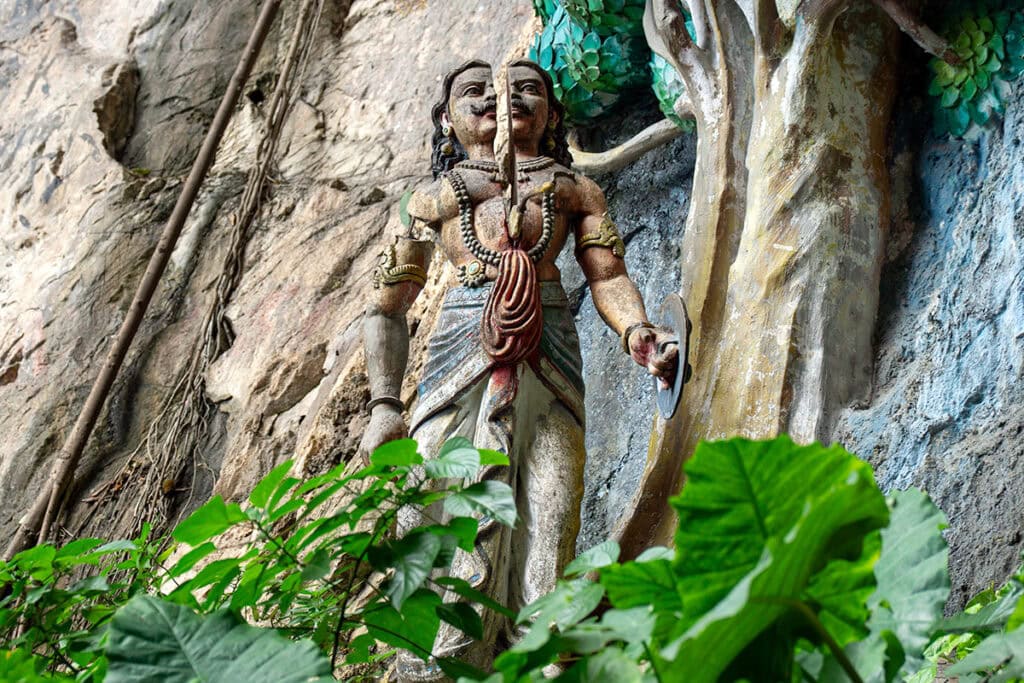
Several statues and shrines inside the Temple Cave depict Hindu deities and mythological stories associated with Murugan, the main deity worshipped at Batu Caves.
Murugan — also known as Kartikeya or Subramanya — is traditionally portrayed holding the Vel, a divine spear symbolising spiritual power and protection.
Some statues illustrate scenes from Murugan mythology, including the story of Murugan defeating the demon Surapadman, representing the triumph of good over evil.
These statues serve both devotional and educational purposes, helping devotees and visitors understand the mythology connected to Murugan and the religious traditions practiced at Batu Caves.
Puja and Hindu Prayer Rituals
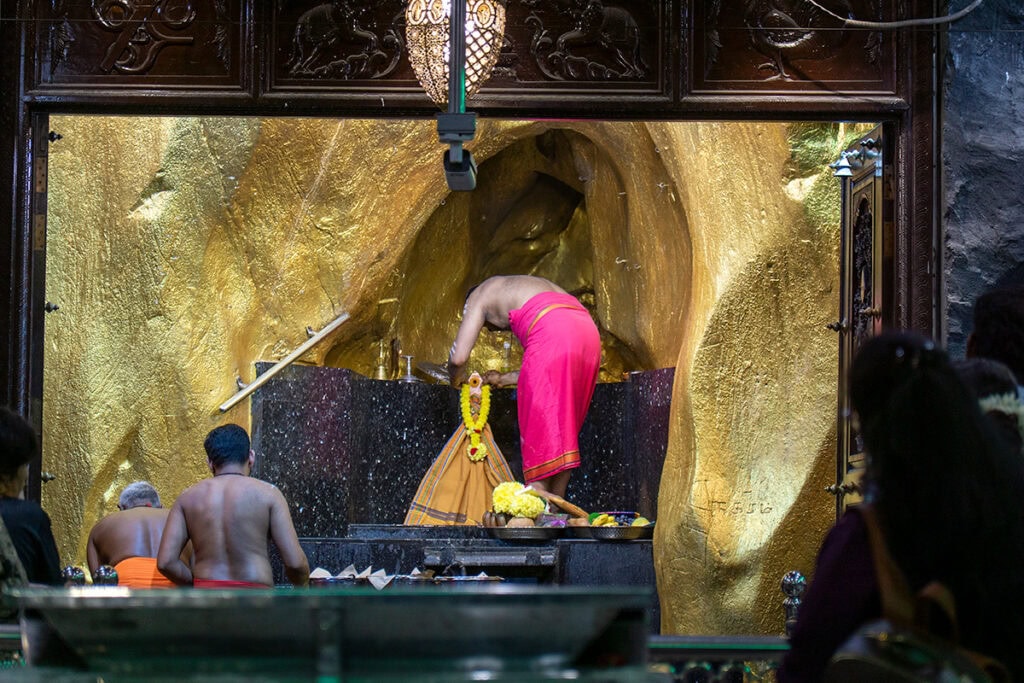
Inside the Temple Cave, visitors will often observe Hindu prayer rituals known as puja taking place throughout the day.
Devotees present offerings such as flowers, coconuts, fruits, milk, and incense at the temple shrines while priests chant prayers and ring ceremonial bells.
Visitors are welcome to observe respectfully, but the cave remains an active place of worship. Tourists should avoid blocking prayer areas, maintain quiet behaviour, and ask permission before photographing worshippers during rituals.
During major festivals such as Thaipusam, the scale of religious devotion becomes even more visible as thousands of pilgrims climb the staircase to perform offerings to Lord Murugan.
Other Caves and Attractions at Batu Caves
The Batu Caves limestone hill contains 18 caves in total. Most are not accessible to the public — some are sealed, others are used for religious purposes, and a few are restricted conservation areas. The caves below are the ones visitors can actually enter or see during a normal visit.
Beyond the caves, several temples and structures at ground level are worth seeing — and easy to miss if you head straight for the staircase on arrival.
Ramayana Cave
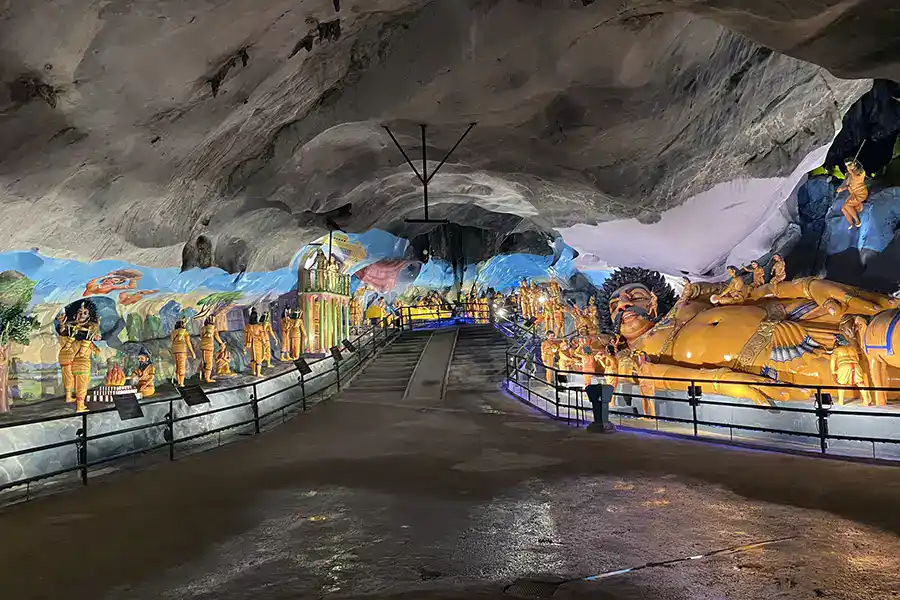
The Ramayana Cave sits at the base of the hill on your right as you reach the second entrance — directly beside the Hanuman temple. It features life-sized statues and painted murals depicting scenes from the Ramayana Saga — one of Hinduism’s two major epic texts. The cave entrance is marked by a 15-metre green statue of Hanuman, the monkey god and devoted companion of Rama.
Entry costs approximately RM15. The cave is smaller and less visited than the Temple Cave, but it offers a clear, visually engaging introduction to Hindu mythology. It can be done before or after the main staircase climb — before works well if you want to build context before heading up.
Cave Villa
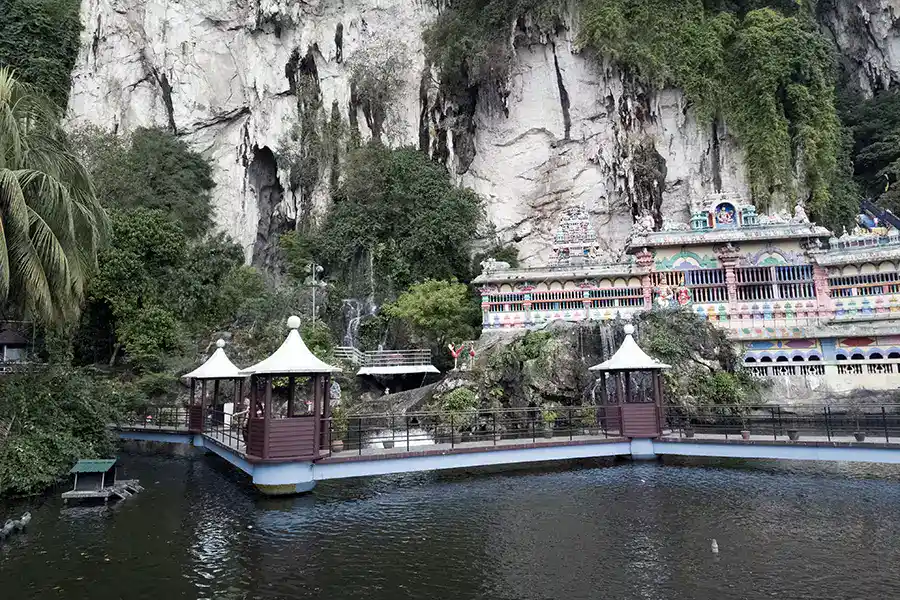
Cave Villa sits at the base of the hill and contains a collection of Hindu statues, paintings, and a small reptile exhibit. Entry costs approximately RM10. The cave itself is visually colourful and photogenic, but it has received mixed feedback from visitors — particularly around the presence of caged animals inside the exhibit, which many travellers find uncomfortable.
If you’re short on time, the free Temple Cave and the RM15 Ramayana Cave offer stronger experiences. Cave Villa is optional and not essential for a first visit.
Dark Cave
The Dark Cave entrance sits at the 204th step of the staircase. This is a separate 2-kilometre cave system that was previously open for guided educational and adventure tours managed by the Malaysian Nature Society. The cave is home to rare species including the trapdoor spider (Liphistius batuensis), which is found nowhere else in the world.
The Dark Cave is permanently closed to public access. We contacted the Malaysian Nature Society by phone on 5 February 2026 to verify, and they confirmed there are no plans to reopen the cave for tours in the future. Visitors can still see the sealed entrance on the staircase, but access to the cave system itself is no longer available.
Ground-Level Temples
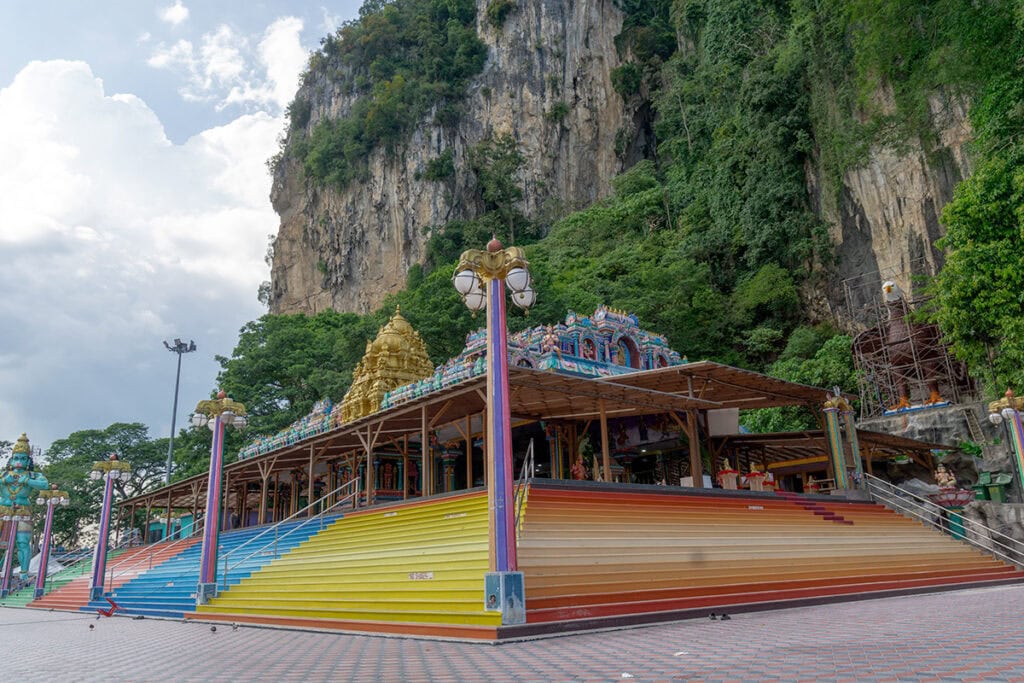
Several temples sit at the base of the hill and are easy to miss if you head straight for the staircase. These include the Sri Venkatachalapathi & Alamelu Temple, the Sri Subramaniar Temple, and the gopuram (ornate temple tower) near the staircase entrance. The gopuram is a colourful multi-tiered gateway decorated with carved figures of Hindu deities — a hallmark of South Indian Dravidian temple architecture and one of the more photogenic structures at the site.
These ground-level temples are active places of worship, often quieter than the main cave, and offer an accessible cultural experience for visitors who prefer not to climb.
Rock Climbing
The limestone cliffs on the north-eastern side of Batu Caves — known as the Damai Wall — have more than 160 climbing routes ranging from beginner to advanced. Rock climbing here is entirely separate from the temple visit and requires advance arrangement with a local climbing operator. It draws a niche community of climbers and is worth noting for visitors with that interest.
Turn Your Batu Caves Visit Into a Full Day Experience from Kuala Lumpur
Many first-time visitors combine Batu Caves with an evening trip to Kuala Selangor for sunset views, firefly watching, silver leaf monkeys, and a relaxing riverside atmosphere far from the city crowds. It’s one of the most popular nature and cultural experiences near Kuala Lumpur.
Visiting Information
This guide provides an overview of Batu Caves, while the articles below explore specific topics such as visiting times, dress code, transport options, and tour choices in more detail.
Entrance Fees at Batu Caves
Most of the Batu Caves complex is free to visit. The main Temple Cave, the Lord Murugan statue area, and the ground-level temples all have no entrance charge. Only a few optional attractions require a small fee.
| Attraction | Fee | Notes |
|---|---|---|
| Temple Cave (272-step main cave) | Free | Active Hindu temple — no ticket required |
| Lord Murugan Statue (entrance plaza) | Free | Main photography area at the base |
| Ground-level temples | Free | Sri Subramaniar Swamy Temple and others at the base |
| Ramayana Cave | ~RM15 | Ground level, right side at the second entrance |
| Cave Villa | ~RM10 | Ground level; optional — see notes in the caves section above |
| Sarong hire (dress code) | ~RM15 | Required at the entrance if shoulders or knees are not covered |
Note: Entrance fees and sarong prices were last verified on-site in June 2026. Prices may change occasionally, especially during festivals such as Thaipusam, so visitors should confirm the latest information at the entrance.
Good news for visitors: the main Temple Cave and the majority of the Batu Caves complex can be visited completely free of charge. Only a few optional attractions, such as the Ramayana Cave and Cave Villa, require a small entrance fee.
What Are the Batu Caves Opening Hours?
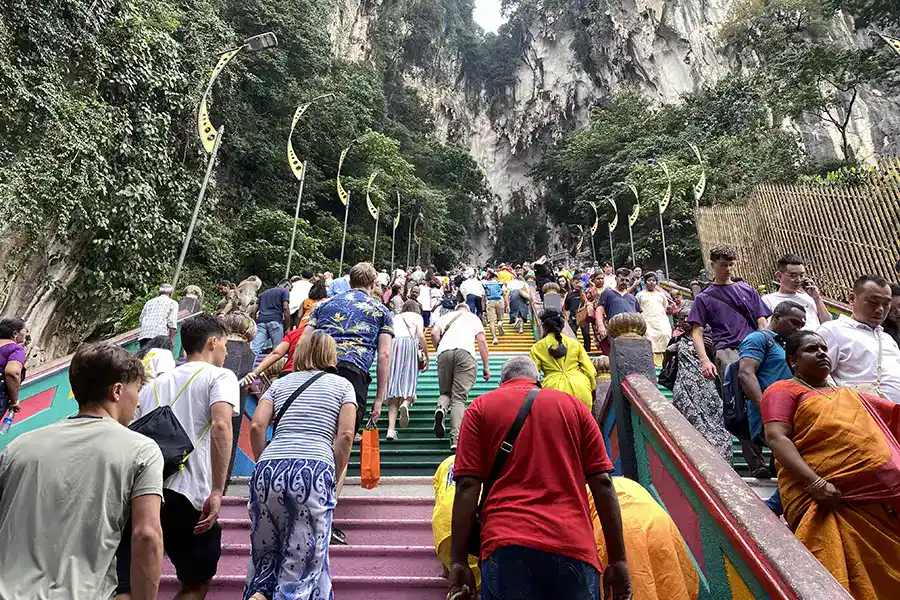
Batu Caves is open daily from 5:30 AM, with the staircase to the Temple Cave accessible until 8:30 PM. Early morning before 8:00 AM is generally the most comfortable window. For full daily hours, last entry times, and how hours change during Thaipusam, see the Batu Caves opening hours guide.
What Is the Dress Code at Batu Caves?

Batu Caves is an active Hindu temple and modest dress is required to enter the temple areas. Both men and women must cover shoulders and knees. Sarongs are available near the entrance for around RM15 if needed. See the full Batu Caves dress code guide for exactly what to wear.
How to Get to Batu Caves from Kuala Lumpur
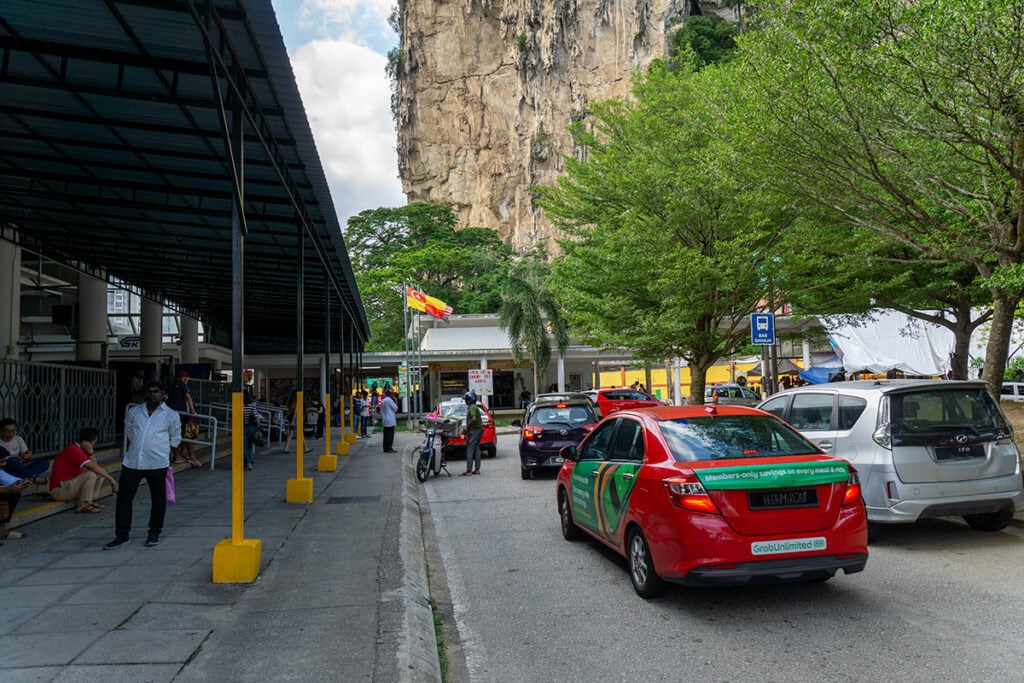
Batu Caves is about 13 km north of central Kuala Lumpur and straightforward to reach. The KTM Komuter from KL Sentral stops directly at the temple entrance — around 30 minutes and RM2.20. For all transport options including Ehailing service, private tour, and driving with parking details, see the full how to get to Batu Caves guide.
How Long to Spend at Batu Caves
Most visitors spend 1–2 hours at Batu Caves. This usually allows enough time to climb the 272-step staircase, explore the Temple Cave, and return to the base area near the Murugan statue.
If you plan to visit the Ramayana Cave, walk around the ground-level temples, or take time for photos along the staircase, allow an additional 30–45 minutes.
Serious photographers and content creators may prefer to spend 3–4 hours at Batu Caves. This allows time to explore different angles of the Murugan statue, photograph the staircase under changing light conditions, and capture the dramatic limestone interior of the Temple Cave without rushing.
Lockers and Bag Storage
Lockers are available at the base of Batu Caves near the entrance area for visitors who need to store backpacks or larger bags before climbing the staircase. These self-service lockers are useful if you arrive with luggage or prefer not to carry heavy items up the 272 steps to the Temple Cave.
Locker sizes typically range from medium to extra-large, allowing visitors to store backpacks, camera bags, or small suitcases while exploring the site.
Because the staircase climb can be physically demanding in Kuala Lumpur’s tropical heat, using the lockers can make the visit more comfortable, especially for travellers arriving directly from the KTM Batu Caves station or nearby parking areas.
Where to Eat Near Batu Caves

There is no food available inside the Temple Cave or on the staircase. At the base of the hill, a colourful commercial complex houses several Indian restaurants, small eateries, and drink stalls — most visible as soon as you step out of the Batu Caves KTM station or walk from the car park.
The food here is predominantly South Indian, which reflects the Tamil Hindu community that has maintained the temple for over a century. Four things worth trying:
- Roti canai — a flaky flatbread served with dhal or curry, widely considered one of Malaysia’s best street foods. It’s light enough for a pre-climb snack or a quick post-visit meal.
- Banana leaf rice — rice served on a fresh banana leaf with vegetable curries, papadum, pickles, and optional meat or fish. This is a full meal and the most popular lunch option at the restaurants near the entrance.
- Noodles — fried or soup-based noodle dishes are available at most of the stalls, offering a lighter alternative to rice.
- Fresh coconut — sold by vendors around the base area. After climbing 272 steps in tropical heat, this is one of the most practical ways to rehydrate.
A full meal typically costs RM8–15 per person. There are no Western chain restaurants or cafes at the site — the food options are local and informal, which is part of the experience.
If you’re combining Batu Caves with a fireflies evening tour, dinner is usually included at a seafood restaurant along the Selangor River, so eating heavily at Batu Caves beforehand isn’t necessary.
Is Batu Caves Worth Visiting?
For most travellers visiting Kuala Lumpur for the first time, Batu Caves is absolutely worth visiting. The temple complex combines dramatic natural scenery, vibrant Hindu culture, and one of the most recognisable landmarks in Malaysia — all located just a short distance from the city centre.
The site offers several experiences in a relatively small area. Visitors can see the towering 42.7-metre statue of Lord Murugan, climb the famous 272 rainbow-coloured steps, explore the vast Temple Cave, and observe daily religious activity that has taken place here for more than a century.
Another reason Batu Caves remains one of the most popular attractions near Kuala Lumpur is how easy it is to visit. The temple complex is only about 30 minutes from central Kuala Lumpur, and entry to the main cave is free. Because most travellers spend one to two hours exploring the site, it also fits easily into a half-day itinerary.
For many visitors, Batu Caves becomes even more memorable when combined with other experiences around Kuala Lumpur and Selangor. Popular combinations include exploring Kuala Lumpur’s city landmarks or pairing the visit with an evening of firefly watching in Kuala Selangor — one of the most popular ways to extend a Batu Caves day into a full evening.
While Batu Caves can be explored independently, many travellers prefer to include it as part of a Batu Caves and Kuala Lumpur city tour, which combines transport, local insights, and several major city attractions in one trip.
We Go With Anuar is a private tour company based in Kuala Lumpur, operated by Anuar — a local Malaysian who has been leading private day trips across Peninsular Malaysia since 2008, including Batu Caves city tours.
Who Should Visit Batu Caves?
Batu Caves appeals to a wide range of travellers visiting Kuala Lumpur, especially those interested in culture, photography, and unique landmarks. Because the site is located only about 30 minutes from the city centre, it is one of the easiest cultural experiences to include in a Kuala Lumpur itinerary.
First-time visitors to Kuala Lumpur
Many travellers include Batu Caves as one of the first cultural stops when exploring the city. The temple complex offers a glimpse into Malaysia’s Hindu traditions while also showcasing one of the country’s most recognisable landmarks.
Travellers interested in culture and religion
As an active Hindu pilgrimage site dedicated to Lord Murugan, Batu Caves provides an opportunity to observe religious rituals, temple offerings, and devotional practices that take place daily inside the Temple Cave.
Photographers and architecture enthusiasts
The dramatic limestone formations, colourful 272-step staircase, and towering Murugan statue make Batu Caves one of the most photogenic places near Kuala Lumpur. Early morning visits often provide the best lighting conditions.
Visitors with limited time in Kuala Lumpur
Because the temple complex can typically be explored in one to two hours, Batu Caves fits easily into a half-day plan. Many travellers combine the visit with a Kuala Lumpur city tour or other nearby attractions.
Families and casual travellers
The climb to the Temple Cave is manageable for most visitors with average mobility, and families with children frequently visit the site. Taking breaks along the staircase and visiting during cooler hours helps make the experience more comfortable.
Visitors who prefer a slower pace or who may find the staircase challenging can still enjoy the Murugan statue, Ramayana Cave, and ground-level temples without climbing the steps.
Photography at Batu Caves
Batu Caves is one of the most photographed landmarks near Kuala Lumpur. The colourful staircase, towering Murugan statue, and dramatic limestone cave entrance create several excellent photography spots throughout the complex.
Most visitors take photos at the base of the stairs, but there are actually multiple angles worth exploring.
Murugan Statue and Staircase View
The most iconic photo is taken from the open plaza at the base of the hill, where the 42.7-metre golden statue of Lord Murugan stands directly in front of the rainbow staircase.
Standing slightly back from the statue allows you to capture both the statue and the staircase rising behind it. This wide perspective shows the full scale of Batu Caves and is the classic image seen in many travel guides.
Midway Staircase View
If you stop halfway up the staircase and turn around, you’ll get a great view looking down toward the temple complex below. This angle captures the colourful steps stretching downward with the Kuala Lumpur skyline faintly visible in the distance.
Many visitors pause here not only to rest but also to take photos of the staircase pattern.
Inside the Temple Cave
Inside the Temple Cave, natural light enters through openings in the cave ceiling, creating dramatic contrasts between the dark limestone walls and the temple structures below.
The best photos here are taken facing upward toward the cave opening, where sunlight illuminates the interior and highlights the scale of the limestone chamber.
Ramayana Cave Entrance
At the base of the hill, the entrance to the Ramayana Cave features a large green statue of Hanuman and colourful Hindu statues around the entrance. This area is often quieter than the main staircase and offers a different style of photo with detailed sculptures and vivid colours.
Timing makes as much difference as location when photographing Batu Caves.
Lighting conditions at Batu Caves change significantly throughout the day, and timing can make a big difference for photography.
Early morning (around 7:00–9:00 AM) is usually the best time for photos. The sunlight is softer, temperatures are cooler, and the staircase is less crowded. This is also the best time to photograph the Murugan statue and colourful staircase without large tour groups.
Late afternoon can also produce good lighting, especially inside the Temple Cave when sunlight enters through the openings in the limestone ceiling and illuminates the interior.
Midday often brings the harshest sunlight and the largest crowds, which can make photography more challenging.
For visitors hoping to capture the staircase with fewer people, arriving shortly after the complex opens in the morning usually provides the best opportunity.
Thaipusam at Batu Caves
Thaipusam is the most significant religious event at Batu Caves and one of the largest Hindu festivals celebrated in Malaysia. It falls in January or early February (based on the Tamil calendar) and draws hundreds of thousands of devotees who come to honour Lord Murugan.
The festival is marked by a procession that begins at Sri Mahamariamman Temple in Kuala Lumpur, carrying a silver chariot to Batu Caves. Devotees climb the 272 steps carrying kavadi — ornate portable shrines — as acts of devotion, gratitude, or penance. Some participants undergo body piercings with vel skewers as part of the ritual.
For tourists, Thaipusam offers a powerful cultural experience unlike anything else in Malaysia. However, the enormous crowds, restricted access, and road closures mean the visit requires different planning than a normal day — on the day itself, only the KTM Komuter train can reach Batu Caves; no private tour, taxi, or e-hailing service can get through. For exact 2027 dates, what to expect, and why we recommend visiting two days before the main event instead, see our complete Thaipusam at Batu Caves guide.
Visiting Batu Caves on Your Own vs With a Guide
Batu Caves is easy to visit independently via KTM, and the main Temple Cave is free to enter. Joining a guided tour adds hotel pickup, air-conditioned transport, and local context — and makes it easier to combine Batu Caves with other day trips from Kuala Lumpur such as Kuala Selangor or a Kuala Lumpur city tour.
For a full comparison of both options including costs and what each experience is actually like, see our guide to Batu Caves private tour vs self-visit. For a breakdown of what guided tours include and how to choose the right format, see the Batu Caves tour guide. If you are ready to compare available options, browse our full list of day tours from Kuala Lumpur with pricing and itinerary details.
Practical Tips for First-Time Visitors
- Hydration: Bring your own water bottle. There are no water fountains on the staircase or inside the Temple Cave. Vendors at the base sell bottled water.
- Toilets: Restrooms are available at the base of the hill. There are no toilet facilities at the Temple Cave level. Use the ground-level facilities before beginning the climb.
- Footwear: Wear comfortable shoes with grip — the steps can be slippery, particularly after rain. You will need to remove shoes at shrine platforms inside the cave.
- Photography: Photography is allowed in most areas, including the staircase and inside the Temple Cave. Avoid photographing worshippers during prayers without permission. Flash photography and drones are not permitted inside the cave.
- Cash: Carry some cash for Ramayana Cave entry, sarong purchase (if needed), vendor food, and toilet access. If you need to exchange currency, a money changer is available on-site in the same building as the restaurant and souvenir shops at the base of the hill.
- Rain: Afternoon rain is common, especially during the November–February monsoon season. The staircase becomes slippery when wet. Early morning visits reduce rain risk.
- Accessibility: There is no elevator or alternative route to the Temple Cave at present. An escalator is currently being developed by the temple custodians and is expected to be ready by the end of 2026. Until then, the ground-level attractions (Murugan statue, gopuram, base temples, Ramayana Cave) are accessible without climbing.
Plan Your Batu Caves Visit
Use the guides below to plan the practical details of your visit, from choosing the best time to go to deciding whether to visit independently or with a guide.
Before You Visit
Planning Your Experience
- Batu Caves Staircase
- Batu Caves Tour Guide
- How to Get to Batu Caves
- Visiting Batu Caves on Your Own vs With a Private Guide
Tour Options
Nearby Attractions to Combine with Batu Caves
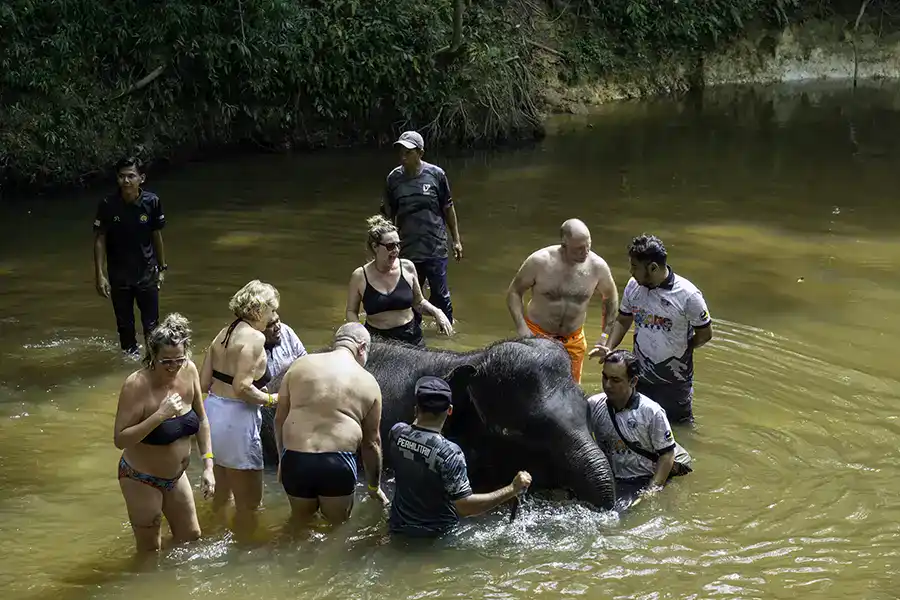
Batu Caves works well as part of a longer day rather than a standalone visit. Because it only takes 1–2 hours, most travellers pair it with other stops in Kuala Lumpur or Selangor.
Kuala Lumpur city highlights — Batu Caves in the morning, followed by Petronas Twin Towers, Merdeka Square, Thean Hou Temple, and KL’s historic neighbourhoods in the afternoon. This is the most common combination for first-time visitors to the city. Book the Batu Caves and KL City Highlights Tour as a private half-day trip with hotel pickup.
Kuala Selangor fireflies — visit Batu Caves in the late afternoon, then continue to Kuala Selangor for a seafood dinner and an evening firefly boat ride along the river. This is the most popular evening combination from KL. Read the full guide on how to combine the Batu Caves and Fireflies Tour in one day, including timing and what to expect.
Kuala Gandah Elephant Sanctuary — a full-day nature trip combining Batu Caves with Malaysia’s elephant conservation centre in Pahang, including an optional elephant bathing session.
En route to the highlands or rainforest — Batu Caves is on the northern exit route from Kuala Lumpur, making it a convenient first stop for travellers heading to Cameron Highlands for a few days or continuing further north to Taman Negara.
Can also be combined with Kuala Selangor fireflies or Kuala Gandah Elephant Sanctuary
About This Author
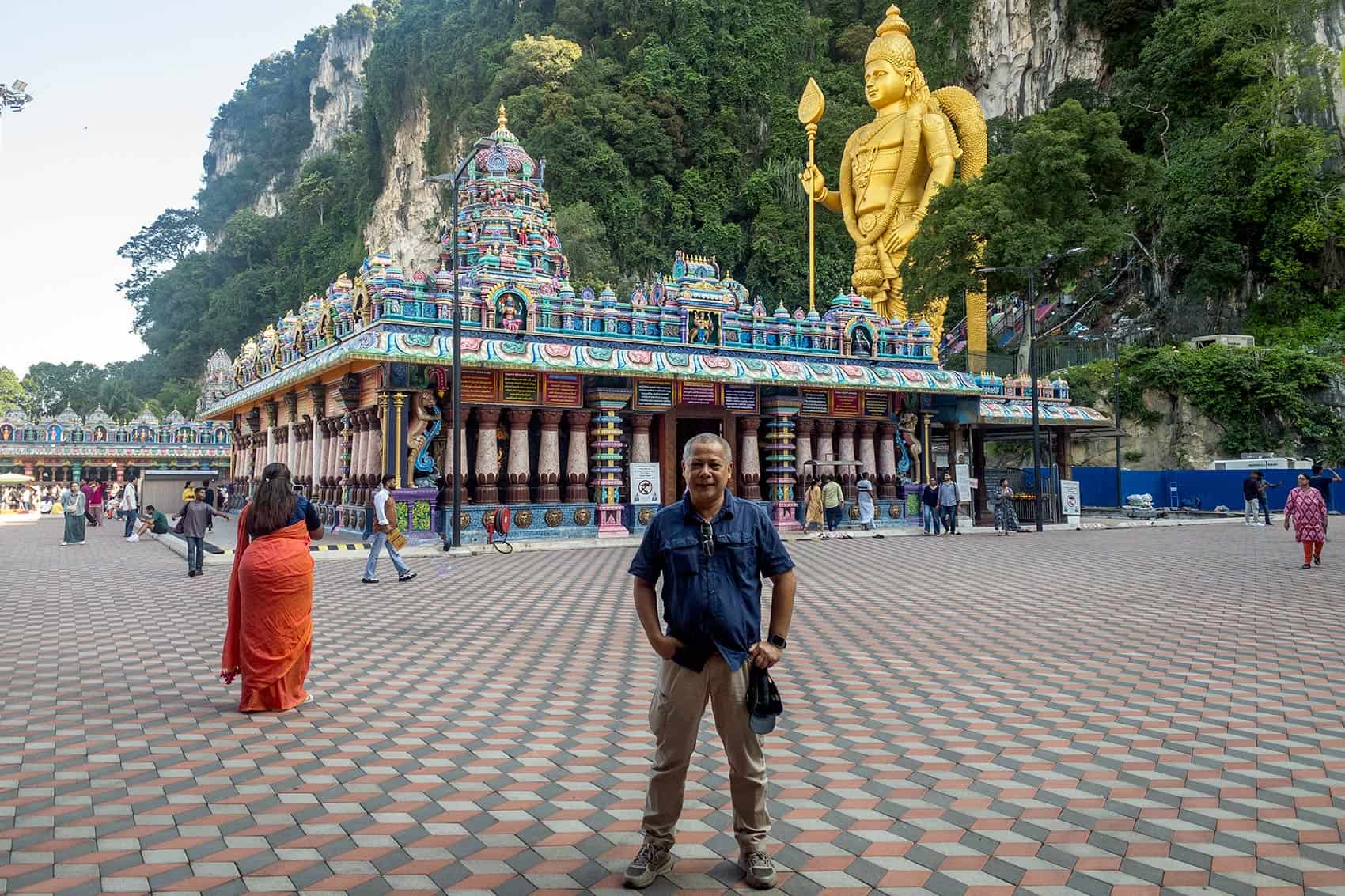
Book a Private Batu Caves Tour from Kuala Lumpur We Go With Anuar combines Batu Caves with Kuala Lumpur city highlights in one private half-day tour — hotel pickup included, no shared passengers.
View Tour and Book → 💬 WhatsApp AnuarFrequently Asked Questions About Batu Caves
Last verified on-site: June 2026